Apr 16, 2026
Pooja Room Design Ideas as per Vastu (2026)| Tips Guide
Pooja Room Design Ideas as per Vastu – Create a Sacred Space at Home
A pooja room is one of the most sacred and spiritually significant spaces in any Indian home. It is far more than a corner set aside for daily prayers — it is the heart of your home's positive energy, a sanctuary of peace, and a daily reminder of what truly matters. When designed thoughtfully and in alignment with Vastu Shastra, a pooja room becomes a powerful source of harmony, mental well-being, and prosperity for the entire household.
Whether you live in a spacious independent villa or a compact apartment, the right pooja room design can transform even the smallest corner into a deeply meaningful spiritual space. At Tribuz Interiors, one of Gurgaon's most trusted interior design companies, we blend traditional Vastu wisdom with contemporary design sensibilities to create pooja rooms that are as beautiful as they are spiritually resonant.
Ideal Direction for Pooja Room as per Vastu Shastra
The placement of your pooja room is the single most important Vastu consideration in its design. According to Vastu Shastra, the north-east corner — known as Ishan Kona — is the most auspicious location for a pooja room in any home. This direction is associated with divine energy, clarity of thought, and the flow of positive cosmic forces into the living space.
If the north-east direction is not structurally feasible in your home, the east or north directions are considered suitable alternatives that still attract beneficial energy.
Directions and placements to strictly avoid:
- South direction — considered inauspicious for prayer spaces
- Adjacent to or sharing a wall with bathrooms
- Beneath staircases or overhead beams
- In basements or rooms with no natural ventilation
Getting the placement right from the start is the foundation of a truly Vastu-compliant pooja room. Our home interior design experts at Tribuz Interiors assess your floor plan carefully to identify the most auspicious location before any design work begins.
Pooja Room Design Ideas for Every Home
Modern pooja room design is about finding the perfect balance between timeless spiritual tradition and contemporary home aesthetics. Today's homes demand smart, space-efficient solutions that maintain a sacred ambiance without compromising on style or functionality. Here are the most popular and effective pooja room design ideas for Indian homes in 2026:
1. Wooden Mandir Design
Wooden pooja units remain the most beloved and timeless choice for Indian homes across generations. The warmth of natural wood creates an instantly traditional, divine atmosphere that no other material quite replicates. Intricately carved wooden mandirs with jali patterns, pillar detailing, and arched roofs add a deeply spiritual aesthetic that elevates the entire room.
Wood is also highly versatile — it can be finished in natural teak, warm walnut, classic white, or contemporary grey to complement your home's overall interior design language. Durable, easy to maintain, and available across all budget ranges, a wooden mandir is a timeless investment in your home's spiritual space.
2. Wall-Mounted Pooja Unit
For modern apartments and homes where floor space is at a premium, wall-mounted pooja units offer an elegant, space-saving solution. Mounted at an appropriate height on the north-east wall, these compact units provide a dedicated worship space without occupying valuable floor area.
Wall-mounted designs can be customized with integrated shelves for idols, storage compartments for prayer essentials, built-in lighting, and decorative back panels in marble, MDF, or wood veneer. They are clean, organized, and perfectly suited to the minimalist aesthetic of contemporary homes.
3. Marble Pooja Room
White marble has been synonymous with purity, divinity, and spiritual spaces across Indian culture for centuries — and for good reason. A marble pooja room exudes a quiet, luminous beauty that immediately elevates the sanctity of the space. The natural veining of marble creates a unique, one-of-a-kind backdrop for your idols and prayer rituals.
Marble surfaces reflect light beautifully, brightening the pooja area and creating a calm, serene atmosphere. They are also highly durable and effortless to clean — an important consideration for a space that is used daily. For luxury villa and premium apartment interiors, a full marble pooja room makes a stunning design statement.
4. Glass Door Pooja Room
Glass door pooja units offer a sophisticated contemporary design solution that balances openness with a sense of sacred enclosure. Frosted glass, etched glass with traditional motifs, or clear glass with brass framing — each creates a different aesthetic while keeping the sacred space visually connected to the rest of the home.
This design approach is particularly effective in open-plan living areas, where a fully enclosed room may not be feasible. Glass doors also allow the warm glow of diyas and lamps to filter through beautifully, creating a soft, spiritual ambiance that enhances the entire living space.
5. Corner Pooja Space
Corner pooja units are the perfect design solution for compact homes and apartments where a dedicated room is not possible. A thoughtfully designed corner mandir in the north-east corner of the living room or bedroom can create a peaceful, functional worship space that feels intentional rather than improvised.
With the right design — incorporating a backlit niche, decorative shelving, and a small wooden or marble mandir unit — a corner pooja space can be one of the most charming design features in your home.
6. Open Pooja Room Design
Open pooja spaces integrated directly into the living area are one of the defining interior design trends of 2026. Rather than enclosing the worship area behind doors or walls, this design approach makes the pooja space an organic, visible part of the home's main living zone.
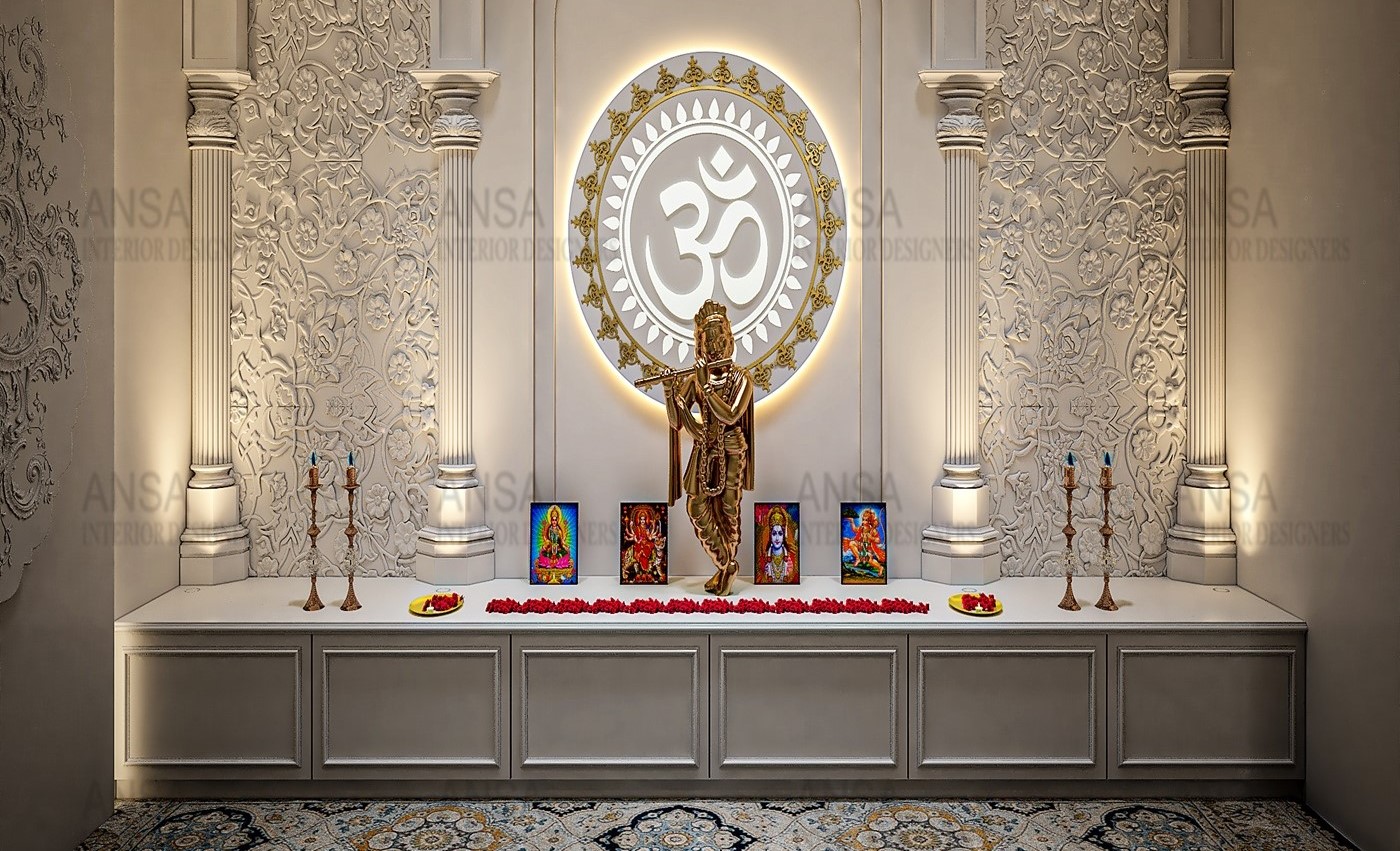
With proper Vastu placement, thoughtful material selection, and dedicated ambient lighting, an open pooja area can become the most visually striking and spiritually uplifting element of your living room — a design focal point that also serves as a daily source of positive energy for everyone in the home.
Vastu Tips for Pooja Room Design
Adhering to Vastu principles in your pooja room design ensures a continuous flow of positive energy and spiritual harmony. Here are the most important Vastu guidelines to follow:
- Idol placement — Idols should face east or west; the devotee should ideally face east while praying
- Idol height — Never place idols directly on the floor; they should be elevated on a platform or shelf
- Colors — Use light, sattvic colors — white, cream, light yellow, or soft gold — to enhance positivity and calm
- Cleanliness — Keep the pooja space immaculate and free of clutter at all times; a clean space attracts divine energy
- Materials — Wood and marble are the most Vastu-auspicious materials for pooja room construction
- Diya placement — The lamp or diya should be placed in the south-east direction within the pooja space
- Storage — Store prayer books, agarbatti, and puja items in organized compartments to maintain orderliness
- Avoid mirrors — Mirrors directly facing idols should be avoided as per Vastu guidelines
Lighting Ideas for Pooja Room
Lighting is one of the most powerful tools in pooja room design — capable of completely transforming the spiritual atmosphere of the space. The right lighting creates a warm, divine glow that makes every prayer moment feel more meaningful and peaceful.
Recommended lighting approaches:
- Warm LED strip lights behind or beneath the idol shelf create a beautiful backlit halo effect
- Backlit panels in marble or onyx add a luxurious, glowing quality to the prayer wall
- Recessed spotlights with warm white bulbs (2700K–3000K) provide focused, flattering light on idols
- Traditional diyas and oil lamps remain the most spiritually significant source of light in any pooja room
- Hanging pendant lights or brass lanterns add a traditional, ceremonial quality to larger pooja rooms
Avoid cool white or blue-toned lighting (above 4000K), which creates a clinical rather than sacred atmosphere.
Colors for Pooja Room as per Vastu
Color has a profound effect on mood, energy, and spiritual receptivity. Vastu Shastra prescribes light, pure, and sattvic colors for pooja spaces — tones that promote inner calm, clarity, and openness to divine energy.
Vastu-recommended colors for pooja rooms:
- White — Represents purity, peace, and spiritual clarity; a timeless choice
- Cream and Off-White — Warm, inviting, and highly versatile across all design styles
- Light Yellow — Associated with prosperity, intellect, and positive energy
- Soft Gold — Adds a sacred, ceremonial warmth to the space
- Pale Blue — Calming and spiritually uplifting; works beautifully in contemporary designs
- Light Beige — Neutral, grounding, and easy to complement with any décor
Colors to avoid — Dark shades like black, dark grey, deep red, or navy blue are considered energy-blocking and are not recommended for pooja spaces.
Benefits of a Vastu-Compliant Pooja Room
A pooja room designed in alignment with Vastu Shastra offers benefits that extend well beyond aesthetics:
- Positive energy flow — Correct placement and design principles channel divine cosmic energy into your home
- Mental clarity and peace — A dedicated, serene worship space supports daily mindfulness and stress relief
- Spiritual growth — A well-designed pooja space encourages regular prayer and deepens spiritual practice
- Prosperity and abundance — Vastu-compliant spaces are believed to attract wealth, health, and harmony
- Harmonious home environment — The positive energy from a well-placed pooja room radiates throughout the entire home
- Enhanced aesthetics — A beautifully designed pooja room elevates the overall interior design of your home
Why Choose Tribuz Interiors for Your Pooja Room Design?
At Tribuz Interiors, we understand that a pooja room is not just another interior design project — it is a deeply personal and spiritually significant space that deserves extraordinary care and attention to detail.
Our design team combines a thorough understanding of Vastu Shastra principles with contemporary design expertise to create pooja rooms that honour tradition while fitting seamlessly into your modern home. From space assessment and Vastu consultation to material selection, execution, and final styling — we handle every aspect of your pooja room design with professionalism and sensitivity.
Whether you are looking for a compact wall-mounted unit for a 2BHK apartment or a grand, full-room marble pooja space in a luxury villa, Tribuz Interiors delivers customized solutions that are beautiful, meaningful, and built to last. Explore our complete home interior design services to see how we transform every space in your home — from the pooja room to the living room, bedroom, kitchen, and beyond.
Frequently Asked Questions (FAQs)
Q1. Which direction is best for a pooja room as per Vastu? The north-east direction (Ishan Kona) is considered the most auspicious placement for a pooja room according to Vastu Shastra. If north-east is not possible, east or north are suitable alternatives.
Q2. Can a pooja room be placed inside a bedroom? Yes, a pooja unit can be placed inside a bedroom if a separate room is not available. It should be positioned in the north-east corner of the bedroom and ideally enclosed or covered with a curtain or door when not in use.
Q3. Which material is best for pooja room design? Wood and marble are the most preferred and Vastu-auspicious materials for pooja rooms. Wood adds warmth and tradition, while marble brings purity and a luxurious spiritual quality.
Q4. What colors are recommended for a pooja room as per Vastu? Light, sattvic colors are ideal — white, cream, light yellow, soft gold, and pale beige are the most recommended shades. Dark colors should be avoided in pooja spaces.
Q5. How much does a pooja room design cost in Gurgaon? Pooja room design costs vary depending on size, materials, and customization. A basic wall-mounted unit may start from ₹25,000–₹50,000, while a fully customized marble or wooden pooja room can range from ₹1 lakh to ₹5 lakh or more. Contact Tribuz Interiors for a personalized quotation.
Q6. Does Tribuz Interiors follow Vastu guidelines in pooja room design? Yes. At Tribuz Interiors, every pooja room design is developed with careful attention to Vastu Shastra principles — from the placement and orientation of the space to material selection, color palettes, idol positioning, and lighting.
Conclusion
A pooja room is one of the most meaningful investments you can make in your home — a space where spirituality, design, and daily life converge. When designed thoughtfully and in alignment with Vastu Shastra, it becomes a continuous source of peace, positive energy, and inspiration for your entire household.
Whether you are building a new home or renovating an existing one, getting your pooja room design right from the start makes an immeasurable difference — not just aesthetically, but spiritually and emotionally as well.
With Tribuz Interiors as your design partner, you gain access to expert Vastu guidance, creative design solutions, and flawless execution that transforms your vision into a sacred space you will cherish every single day. Visit our homepage to explore our complete range of interior design services across Gurgaon — and take the first step toward a home that truly nourishes your soul.
Ready to design your dream pooja room? Contact Tribuz Interiors today for a free consultation.