Apr 17, 2026
Modern False Ceiling Designs for Indian Homes | Cost & Ideas Guide
False Ceiling Design Ideas India: Modern, Budget & Luxury Options for Every Home
False ceilings have quietly become one of the most transformative elements in modern Indian home design. A decade ago, they were considered a luxury reserved for high-end homes. Today, they are a near-standard feature in urban apartments, independent floors, and villas across the country. The reason is straightforward: a well-designed false ceiling changes how a room feels, looks, and functions without touching a single structural wall.
From concealing electrical wiring and AC ducts to enhancing lighting distribution and adding visual depth, false ceilings do far more than decorate. In 2026, Indian homeowners are seeking designs that are practical, energy-efficient, and aligned with contemporary aesthetics. The good news is that achieving a premium, polished look does not require an unlimited budget. With the right planning and the right design partner, even modest investments can deliver dramatic results.
At Tribuz Interiors, Gurgaon's trusted home interior design company, we have designed hundreds of false ceilings across living rooms, bedrooms, kitchens, and entire homes. This comprehensive guide covers everything you need to know about false ceiling design in India in 2026, from materials and costs to room-wise ideas and the most common mistakes to avoid.
Why False Ceiling Design Matters in Modern Indian Homes
Most homeowners invest heavily in walls, flooring, and furniture but overlook the ceiling entirely. This is a significant missed opportunity. The ceiling is often called the fifth wall of a room, and when designed thoughtfully, it can completely redefine a space.
A well-planned false ceiling creates design hierarchy in open-plan layouts, defines zones without physical partitions, improves acoustics, and dramatically enhances lighting. In cities like Gurgaon, Delhi, Bangalore, and Pune, where apartments are compact and every square foot matters, false ceilings add a crucial layer of structure and visual sophistication that makes rooms feel intentional and complete.
Beyond aesthetics, false ceilings deliver a range of practical benefits that make them a genuinely worthwhile investment:
- Concealed infrastructure — Electrical wiring, plumbing pipes, and AC ducts are neatly hidden, creating a clean, clutter-free ceiling surface
- Thermal insulation — A false ceiling creates an air gap that reduces heat transfer, keeping rooms cooler in Indian summers and reducing air conditioning load
- Improved acoustics — Certain ceiling materials absorb sound effectively, reducing echo and noise transmission between floors
- Lighting control — False ceilings enable concealed, layered, and directional lighting that is simply not possible with a bare RCC ceiling
- Enhanced property value — A professionally designed false ceiling is one of the first things buyers and tenants notice, and it adds measurable value to any home
Planning Your False Ceiling Design
Setting a Realistic Budget
Establishing a clear budget before selecting designs is the most important step in any false ceiling project. Costs in India typically range from Rs. 80 to Rs. 250 per sq. ft., depending on the material chosen, the complexity of the design, and the lighting fixtures included.
As a general reference point, a simple gypsum ceiling for a 150 sq. ft. living room may cost between Rs. 15,000 and Rs. 25,000. A designer ceiling with cove lighting, multiple layers, and decorative elements in the same room can go up to Rs. 50,000 or more.
When planning your budget, break it down into the following components:
- Material cost (gypsum board, POP, PVC, or wood)
- Lighting fixtures (LED strips, spotlights, pendants)
- Labor and installation charges
- A contingency buffer of 10 to 15 percent for unexpected requirements
One of the most common budgeting mistakes is trying to design every room at the same level. A smarter approach is to prioritize high-visibility, high-impact areas like the living room and master bedroom, and keep secondary spaces like guest rooms and utility areas simple and cost-effective.
Choosing the Right Material
The material you select for your false ceiling directly determines its appearance, durability, maintenance requirements, and overall cost. Here is a clear breakdown of the most widely used options in India:
Gypsum Board — The most popular false ceiling material in India by a significant margin. Gypsum offers a smooth, paint-ready finish, is lightweight, fire-resistant, and relatively affordable. It works well in living rooms, bedrooms, dining areas, and home offices. For most Indian homes, gypsum provides the best balance of quality, aesthetics, and cost.
POP (Plaster of Paris) — POP allows for highly customized, curved, and ornate ceiling designs that gypsum cannot achieve. It is ideal for traditional, classical, or highly personalized design styles. POP requires slightly more maintenance than gypsum and is best applied by experienced plasterers.
PVC Panels — PVC is the preferred material for moisture-prone areas like kitchens, bathrooms, and utility rooms. It is completely waterproof, easy to clean, and resistant to termites and fungal growth. PVC panels are available in a wide range of colors and finishes.
Wood and Wood Veneers — Wooden false ceilings add unmatched warmth, richness, and a premium quality to interiors. Even a partial wooden ceiling panel used as an accent can elevate the entire room. Wood is best suited for living rooms, dining areas, home libraries, and luxury master bedrooms. It comes at a higher cost and requires periodic maintenance to retain its finish.
Metal Tiles — Used primarily in commercial spaces but increasingly finding their way into industrial-style and contemporary home interiors. Metal ceilings are durable and distinctively modern.
For most Indian homes, gypsum remains the recommended starting point, offering the best combination of finish quality, versatility, and cost-effectiveness.
Popular False Ceiling Design Ideas in India (2026)
False ceiling trends in India are clearly moving toward designs that are cleaner, more functional, and more sophisticated. The era of heavy, overcrowded ceiling patterns is giving way to minimal, purposeful designs that let lighting do the heavy lifting.
1. Minimalist Layered Ceiling
The minimalist layered ceiling uses simple stepped levels with clean, straight lines to create depth and visual interest without clutter. It is the most versatile false ceiling design, working equally well in modern apartments, contemporary villas, and minimalist homes.
This design is cost-effective because it avoids ornate detailing and complex craftsmanship while still delivering a polished, premium look. It pairs beautifully with recessed spotlights, cove lighting, or a combination of both. If you are designing your first false ceiling or working with a tight budget, the minimalist layered design is the safest and most rewarding place to start.
2. Cove Lighting Ceiling
Cove lighting is one of the most consistently popular false ceiling designs in Indian homes, and its popularity is entirely deserved. LED light strips are embedded within recessed grooves or ledges in the ceiling, producing soft, diffused indirect light that bathes the room in a warm, ambient glow.
The result is a room that feels instantly more refined, more relaxed, and more inviting. Cove lighting is energy-efficient, long-lasting, and highly adaptable to different moods through the use of dimmers or smart lighting controls. It works exceptionally well in living rooms, master bedrooms, and dining areas where ambiance plays a key role in the room's character.
3. Wooden False Ceiling
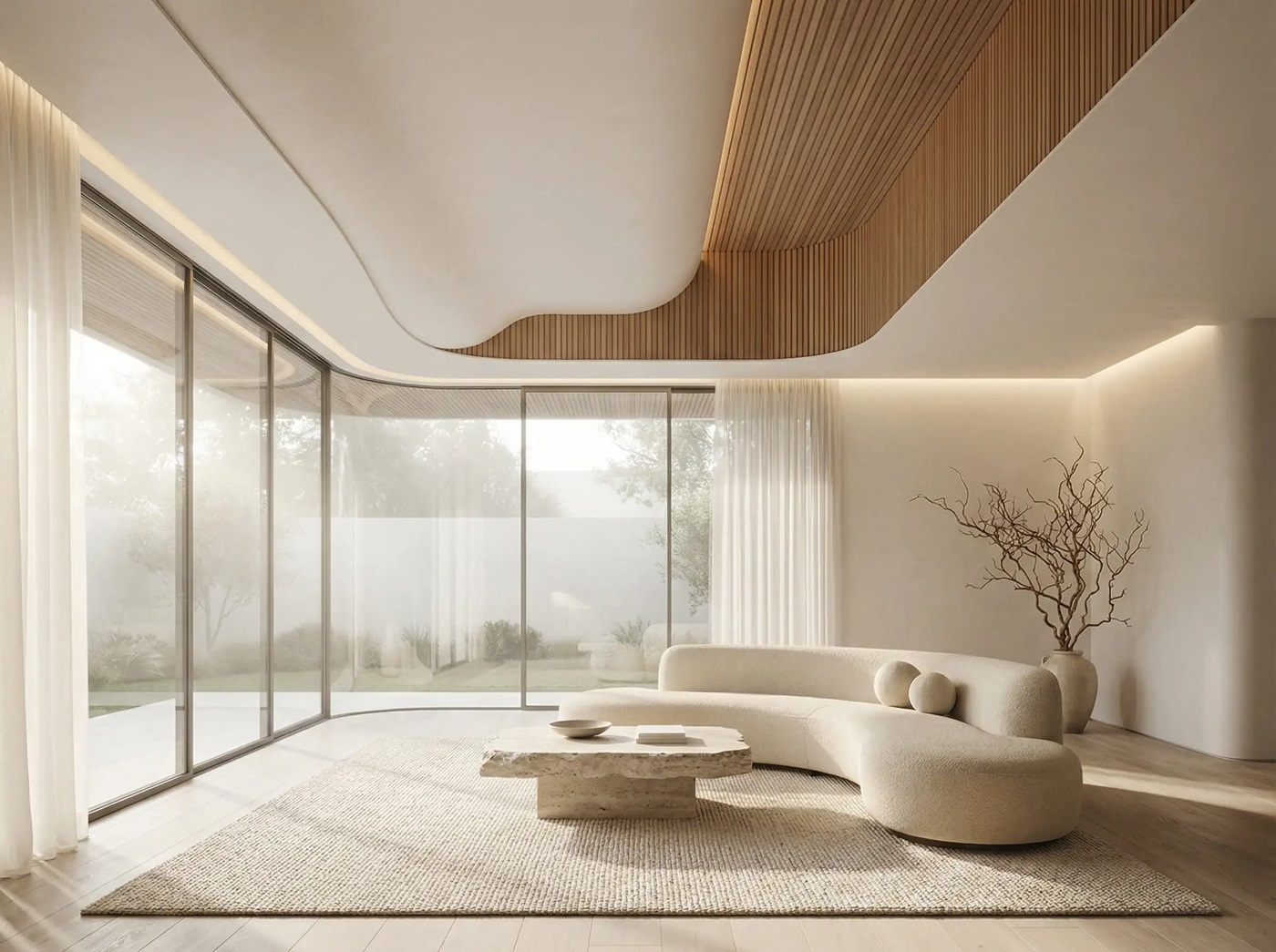
A wooden or wood veneer false ceiling is one of the most effective ways to introduce warmth, texture, and luxury into an interior space. The natural grain and warmth of wood create a visual richness that no painted surface can replicate.
Wooden ceilings do not need to cover the entire surface to make an impact. A central wooden panel above the dining table, a wooden accent strip running the length of the living room, or a full wooden ceiling in the master bedroom can each create a dramatically different and deeply appealing effect. This design approach is widely used in Tribuz Interiors' premium residential projects across Gurgaon and is consistently one of the most appreciated by homeowners.
4. Geometric Ceiling Designs
Geometric false ceiling patterns using rectangular, hexagonal, or grid-based shapes are a prominent trend in 2026. These designs add visual complexity and architectural interest to the ceiling without requiring elaborate craftsmanship.
The key to success with geometric ceilings is restraint. The pattern should complement the room's design language, not compete with it. Subtle, well-proportioned geometric elements create a sophisticated, contemporary look. Overdoing the pattern, on the other hand, can make the ceiling feel busy and overwhelming.
5. Floating Ceiling Design
The floating ceiling creates the visual illusion that the ceiling surface is suspended above the room, disconnected from the walls. This effect is achieved through concealed structural supports and the strategic use of LED lighting in the gap between the floating panel and the surrounding ceiling.
The result is a dramatic, modern, and distinctly premium aesthetic that works particularly well in luxury living rooms, home lounges, and high-end residential projects. The floating ceiling is one of the signature design elements in many of Tribuz Interiors' villa interior projects.
6. Simple POP Designs
POP false ceilings remain a popular choice for homeowners who want a touch of personalization and decorative detail beyond what gypsum can offer. POP allows designers to create curved borders, floral motifs, medallions, and custom profile edges that add character to the ceiling.
POP works best in classical, traditional, or transitional interior styles where some decorative detailing is expected and appreciated. It is slightly more expensive than gypsum and requires a skilled applicator, but the design flexibility it offers is unmatched.
Room-Wise False Ceiling Design Ideas
Living Room Ceiling
The living room is the most visible and socially important space in any home, and it deserves the most thoughtful false ceiling design. A layered ceiling with cove lighting along the perimeter, a central recessed panel with spotlights, and a decorative element above the main seating area is a tried-and-tested formula that consistently delivers excellent results.
Key considerations for living room ceiling design: balanced lighting that eliminates harsh shadows, a design that visually anchors the main seating area, and a ceiling height that feels open and comfortable rather than compressed.
Bedroom Ceiling
Bedroom ceilings should prioritize calm, comfort, and restfulness over visual complexity. Heavy geometric patterns, multiple layers, and bright lighting have no place in a bedroom ceiling design.
The best approach for bedrooms is a simple single or double-layer ceiling with soft cove lighting in warm white tones (2700K to 3000K). A small decorative element directly above the bed head, such as a recessed panel or a subtle wooden accent, can add quiet elegance without disrupting the room's peaceful character. Dimmable lighting is strongly recommended in bedrooms.
Kitchen Ceiling
Kitchen ceilings require a practical-first approach. Moisture, steam, heat, and cooking residue are constant factors in Indian kitchens, and the ceiling material must be chosen accordingly.
PVC panels are the clear recommendation for kitchen ceilings. They are completely waterproof, easy to wipe clean, resistant to staining, and available in a range of neutral colors that suit most kitchen designs. Keep the design simple and the lighting bright, focused, and evenly distributed across the work surfaces.
Bathroom Ceiling
Like kitchens, bathrooms demand waterproof ceiling solutions. PVC is again the preferred material, offering complete moisture resistance and minimal maintenance. Keep the design flat and simple, as bathroom ceilings are rarely seen at length and do not benefit from decorative complexity. Ensure adequate ventilation is planned in conjunction with the ceiling installation.
Lighting Ideas for False Ceilings
Lighting is the element that most determines whether a false ceiling looks ordinary or exceptional. Even a simple gypsum ceiling with the right lighting can look dramatically better than an elaborate ceiling design with poor lighting.
LED Strip Lights — Used within cove recesses for indirect, ambient lighting. Warm white (2700K to 3000K) is recommended for living rooms and bedrooms. Cool white works better in kitchens and study rooms.
Recessed Spotlights — Provide focused, directional light for specific areas or tasks. Ideal for kitchen work surfaces, reading areas, and accent lighting.
Pendant Lights — Decorative fixtures that hang from the ceiling, adding visual interest and personality. Best used above dining tables, kitchen islands, or as statement pieces in living rooms.
Cove Lighting — Indirect LED strip lighting concealed within ceiling grooves. Creates the warmest, most flattering ambient light for residential spaces.
Smart Lighting — Increasingly popular in 2026, smart bulbs and strips can be controlled via app or voice command, allowing instant mood changes across different times of day.
Avoid mixing too many different lighting styles within a single room. Two to three complementary lighting types, well-placed and properly specified, will always outperform a ceiling cluttered with five or six different fixture types competing for attention.
Common False Ceiling Mistakes to Avoid
Even well-intentioned false ceiling projects can go wrong when certain fundamental errors are made. Being aware of these pitfalls before you begin is the best way to avoid them.
Reducing ceiling height too much — Every layer of a false ceiling reduces the effective height of the room. In apartments with standard 9 or 10-foot ceilings, dropping the false ceiling by more than 12 to 18 inches can make the room feel uncomfortably low. Always calculate the finished height before finalizing the design.
Over-designing the ceiling — More layers, more patterns, and more design elements do not mean a better result. A simple, well-executed design is almost always more impressive than a complex one done poorly.
Poor lighting placement — Lighting positions should be planned before the false ceiling framework is installed, not after. Retrofitting lighting into an already-built ceiling is expensive, disruptive, and often results in suboptimal placement.
Ignoring maintenance requirements — Some ceiling designs, particularly those with intricate POP detailing or complex wooden elements, require periodic maintenance. Factor this into your decision-making.
Not planning electrical points in advance — All wiring, switch positions, and junction boxes must be planned and installed before the ceiling is closed. Opening a finished false ceiling to add or move electrical points is a costly mistake.
Choosing the wrong material for the room — Using gypsum in a kitchen or bathroom, or choosing PVC in a formal living room, reflects a fundamental mismatch between material properties and room requirements. Always match the material to the environment.
False Ceiling Cost Breakdown for Indian Homes (2026)
Here is a realistic cost estimate for a standard 2BHK apartment in Gurgaon or a comparable Indian city:
| Space | Estimated Cost Range |
| Living Room (with cove lighting) | Rs. 20,000 to Rs. 50,000 |
| Master Bedroom | Rs. 15,000 to Rs. 30,000 |
| Second Bedroom | Rs. 12,000 to Rs. 25,000 |
| Kitchen (PVC ceiling) | Rs. 8,000 to Rs. 15,000 |
| Bathrooms | Rs. 5,000 to Rs. 10,000 each |
| Total Estimated Cost (2BHK) | Rs. 80,000 to Rs. 1,50,000 |
These are indicative ranges. Actual costs vary based on design complexity, material grades, lighting specifications, and location. Contact Tribuz Interiors for a detailed, project-specific quotation.
Why Choose Tribuz Interiors for False Ceiling Design
At Tribuz Interiors, false ceiling design is not a standalone service. It is an integral part of how we approach every room, every home, and every client's vision. We do not design ceilings in isolation. We design them as part of a complete interior language that ties together flooring, walls, furniture, and lighting into a coherent, beautiful whole.
Our team brings together experienced designers, skilled execution teams, and a transparent project management process that ensures your false ceiling is delivered on time, within budget, and exactly as visualized.
What we offer for false ceiling projects includes complete design consultation and concept development, material selection guidance tailored to your space and budget, integrated lighting planning, and end-to-end execution with quality control at every stage.
Whether you need a simple bedroom ceiling or a full-home false ceiling design across every room, Tribuz Interiors delivers results that are practical, beautiful, and built to last. Explore our complete range of home interior design services to see how we approach every corner of your home with the same level of care and expertise.
Tips to Save Money on False Ceiling Design
A beautiful false ceiling does not require an extravagant budget. These practical strategies help you get the most value from your investment:
- Choose gypsum board as your primary material, as it offers the best cost-to-quality ratio for most applications
- Reserve designer or premium ceiling treatments for key rooms only, such as the living room and master bedroom
- Keep secondary rooms like guest bedrooms and utility areas simple with single-layer flat ceilings
- Select LED lighting throughout, as it consumes significantly less electricity than traditional fixtures and lasts far longer
- Avoid unnecessary layers and decorative elements that add cost without meaningfully improving the design
- Work with experienced professionals from the start, as mistakes in false ceiling installation are expensive to correct after the fact
Frequently Asked Questions (FAQs)
Q1. What is the cost of false ceiling design in India in 2026? False ceiling costs in India typically range from Rs. 80 to Rs. 250 per sq. ft., depending on the material selected and the complexity of the design. A complete 2BHK false ceiling project generally costs between Rs. 80,000 and Rs. 1,50,000.
Q2. Which material is best for false ceiling in Indian homes? Gypsum board is the most widely recommended material for living rooms and bedrooms due to its smooth finish, fire resistance, and affordability. PVC is the best choice for kitchens and bathrooms due to its complete waterproofing.
Q3. Is false ceiling suitable for small rooms? Yes, but the design must be kept simple. A single-layer flat ceiling with cove lighting is ideal for small rooms, as it adds sophistication without reducing visual height.
Q4. How long does a false ceiling last? A well-installed and properly maintained gypsum false ceiling typically lasts 10 to 15 years. PVC ceilings in kitchens and bathrooms can last equally long with minimal maintenance.
Q5. Can a false ceiling help reduce room temperature? Yes. The air gap created between the false ceiling and the structural RCC ceiling acts as a thermal buffer, reducing heat transfer into the room and helping maintain cooler indoor temperatures during Indian summers.
Q6. Does Tribuz Interiors handle false ceiling design and installation? Yes. Tribuz Interiors provides complete end-to-end false ceiling services, from initial design consultation and material selection to lighting planning and final installation. Contact us to discuss your project and receive a customized quotation.
Conclusion
False ceilings are one of the most cost-effective and visually impactful upgrades available to Indian homeowners. When designed well, they transform the character of a room, improve its functionality, and elevate the entire home's interior quality. When designed poorly, they waste money and create problems that are difficult and expensive to fix.
The key principles to remember are straightforward. Keep the design appropriate to the room's purpose. Choose materials based on the environment, not just aesthetics. Plan lighting before the ceiling framework goes up. Prioritize simplicity and quality of execution over complexity and volume of design elements.
In 2026, the direction of false ceiling design in India is clear: minimal, functional, smart, and deeply considered. Whether you are working with a tight budget or planning a luxury renovation, the approach that consistently delivers the best results is the same: start with the right professionals, plan thoroughly, and execute with care.
Tribuz Interiors is ready to help you design a false ceiling that genuinely enhances your home. Visit our homepage to explore our complete portfolio of interior design work across Gurgaon, and contact our team today to take the first step toward a more beautiful, more functional home.