01. The Art of Asymmetry
The Rococo process at Tribuz begins with a departure from the rigid grid. We embrace The Art of Asymmetry, focusing on the "S-Curve" and "C-Curve" as our primary structural guides. Unlike the formal Neoclassical axis, Rococo is about movement. We design spaces that flow organically, where wall panels melt into ceilings and corners are softened into "coves."
We utilize Atmospheric Layering to create a sense of theater. Our designers map out the room’s "Ornamental Rhythm," ensuring that the eye never rests on a flat surface but is instead led through a series of decorative flourishes. The goal is to create a space that feels like a handcrafted masterpiece, intimate yet incredibly lavish.
02. Curated Opulence
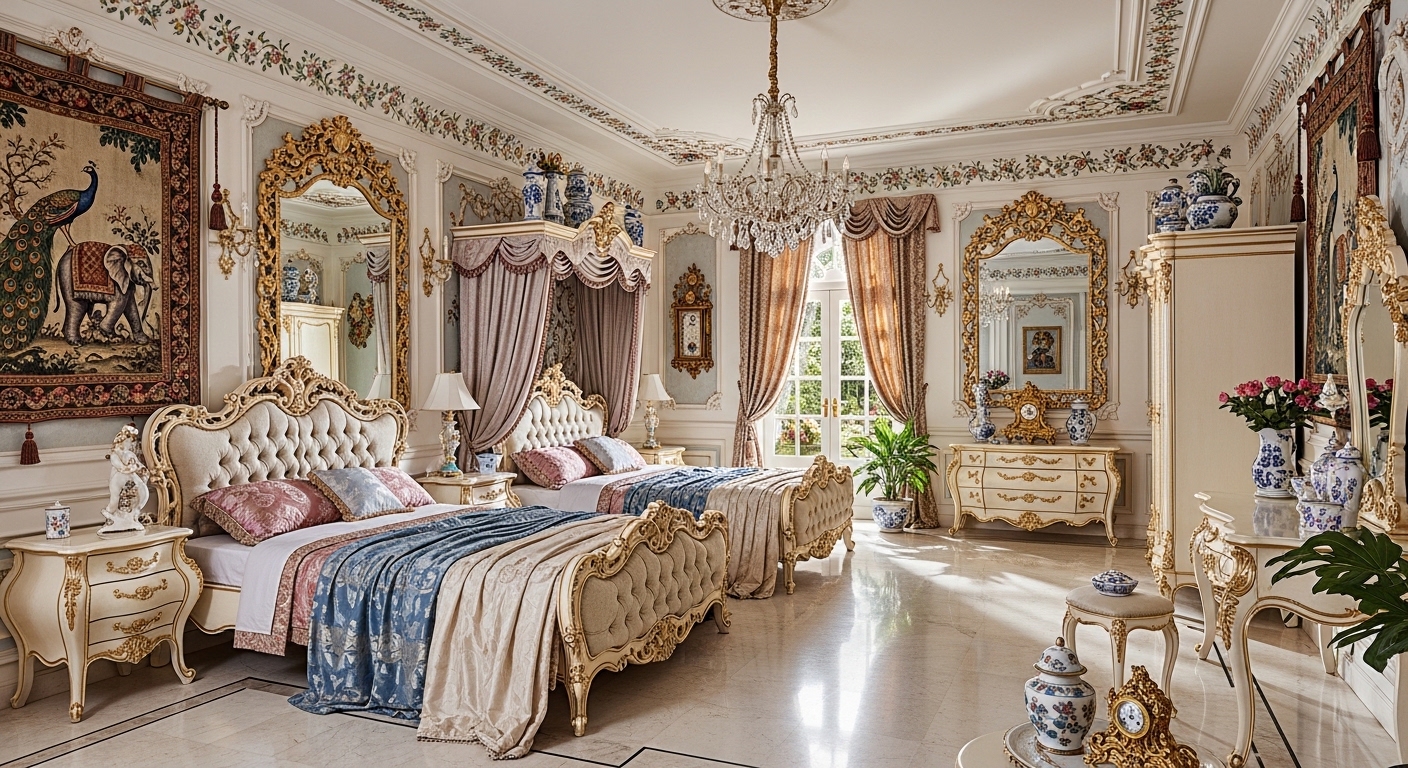
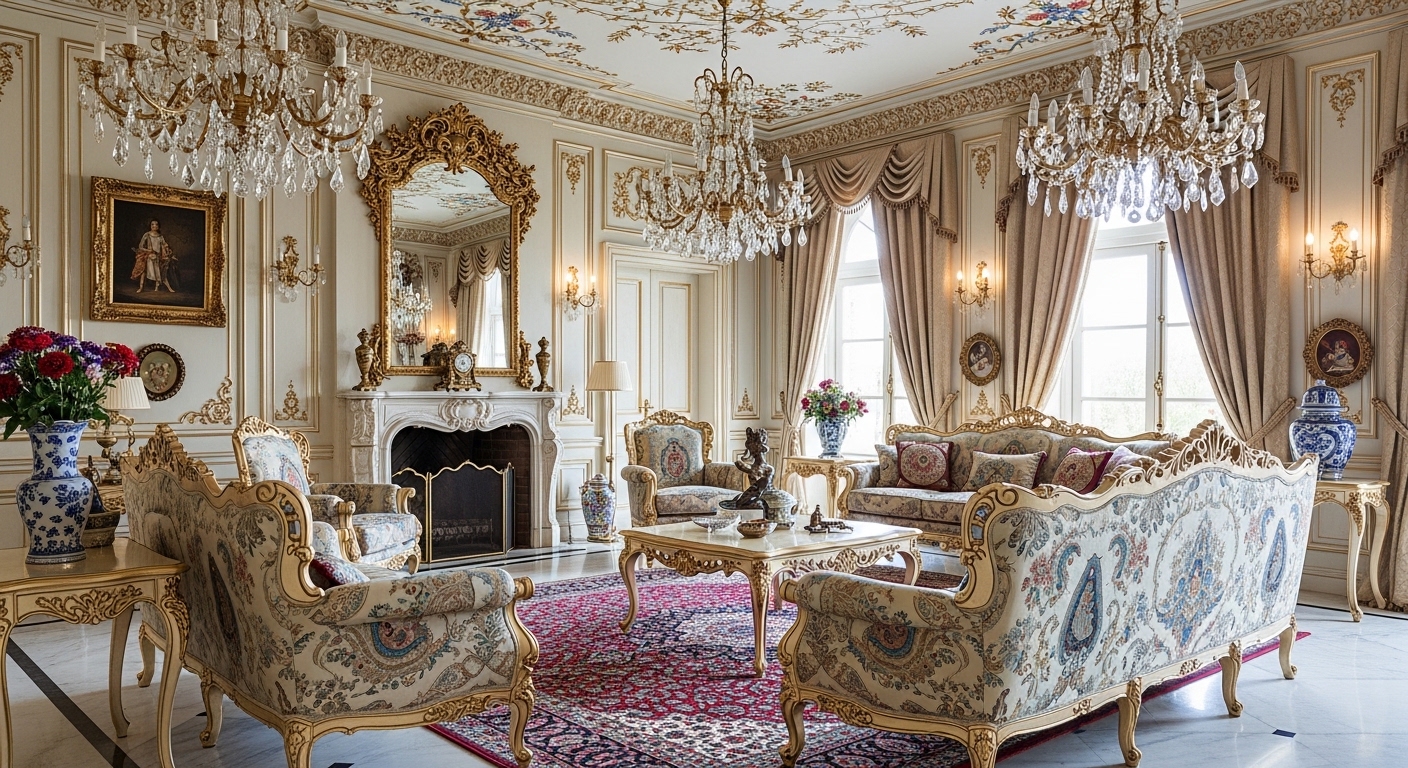
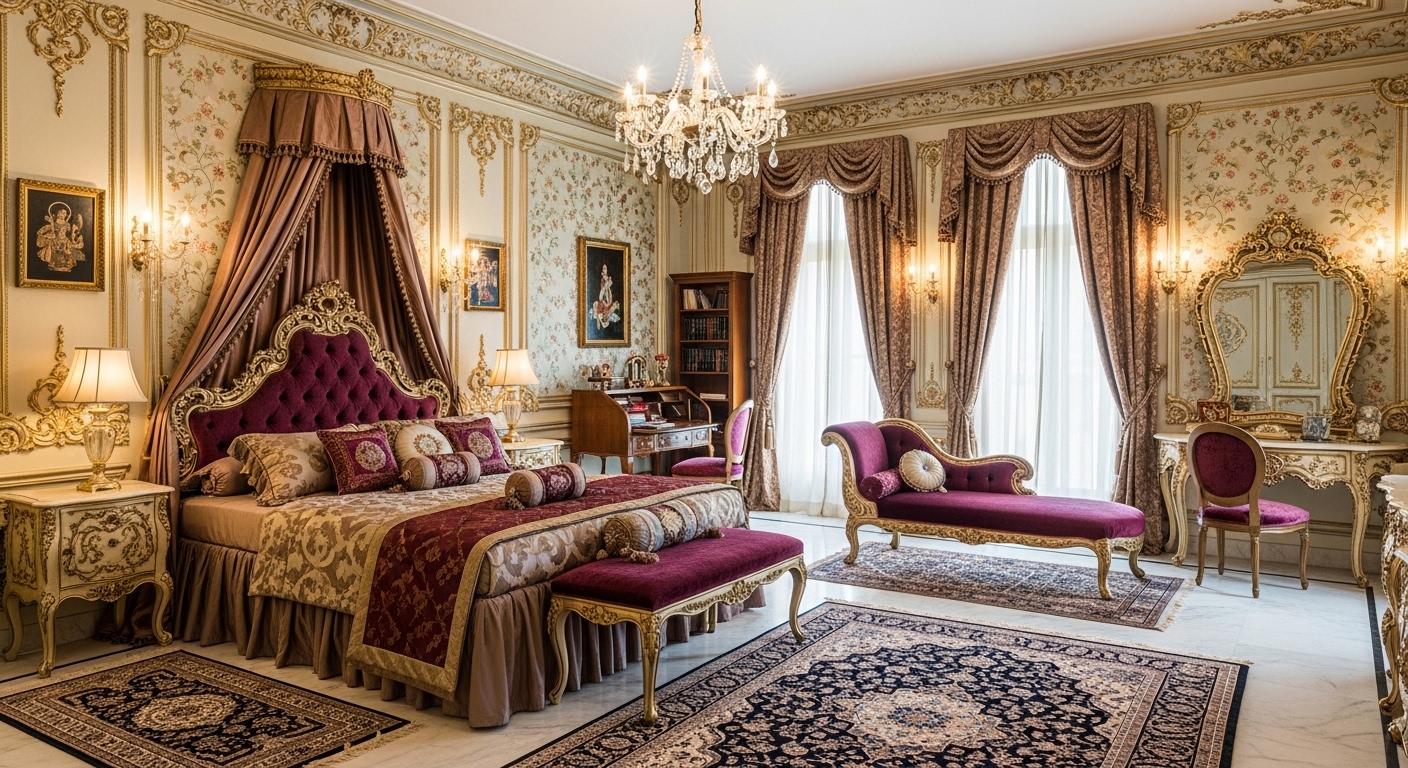
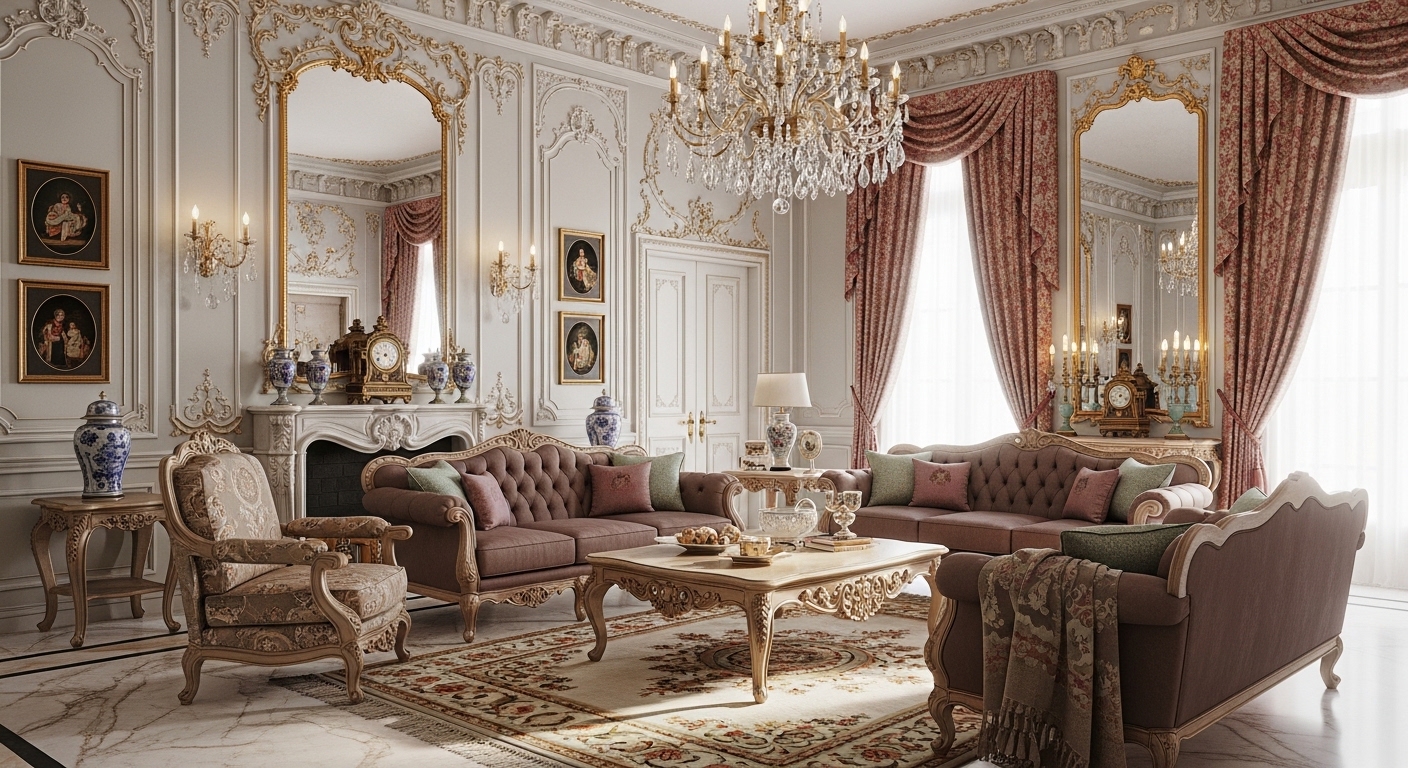
Execution is where we showcase Curated Opulence. Rococo is defined by its materials: mother-of-pearl inlays, gilded boiserie, and pastel-hued frescoes. Our master craftsmen specialize in "Rocaille"—the intricate shell-like and floral carvings that give the style its name.
We balance the heavy detail with a light-hearted palette of gold, ivory, powder blue, and blush pink. We pair ornate mirrors—designed to bounce light and create an illusion of infinite space—with delicate, cabriole-legged furniture. For Tribuz, Rococo isn't just about decoration; it’s about creating a multisensory experience where every inch of the interior is treated as a canvas for the extraordinary.