01. The Architectural Oasis
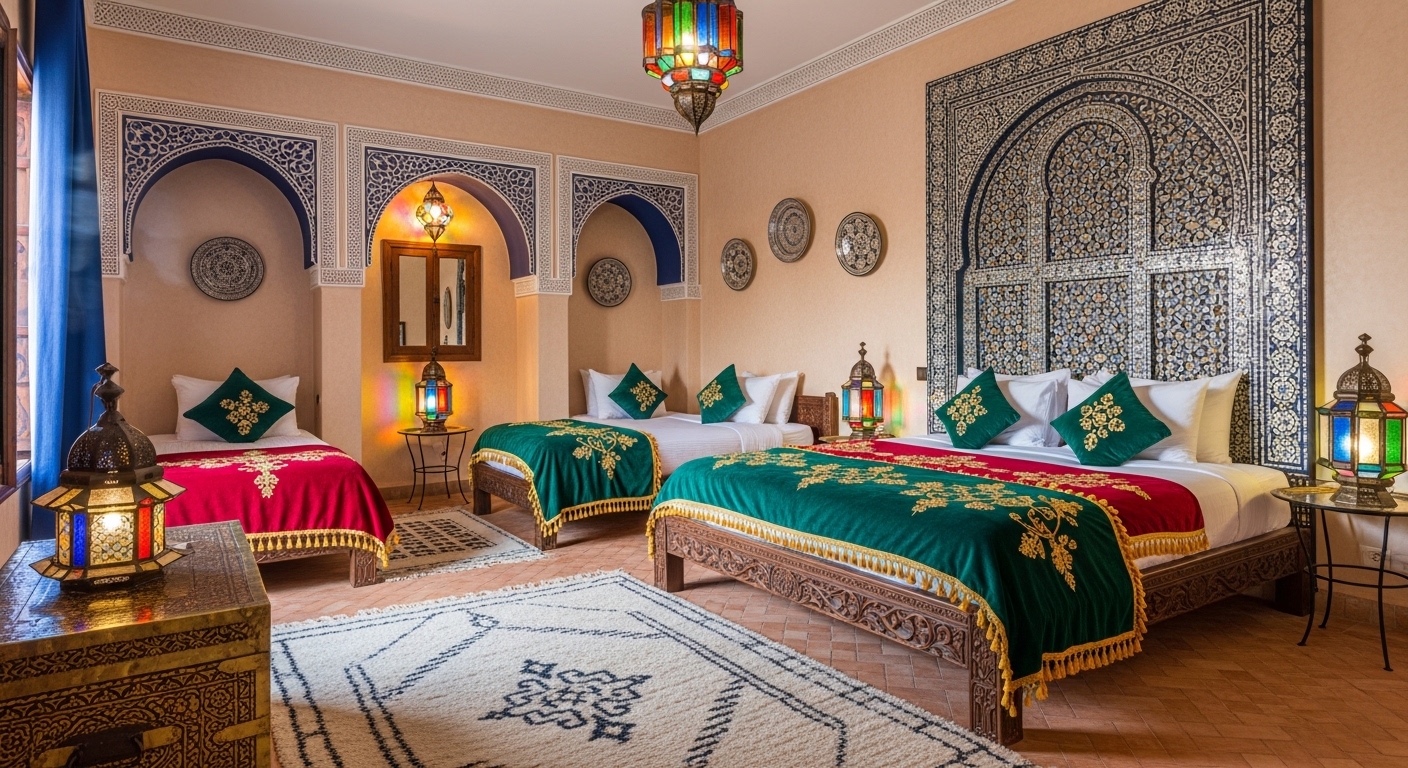
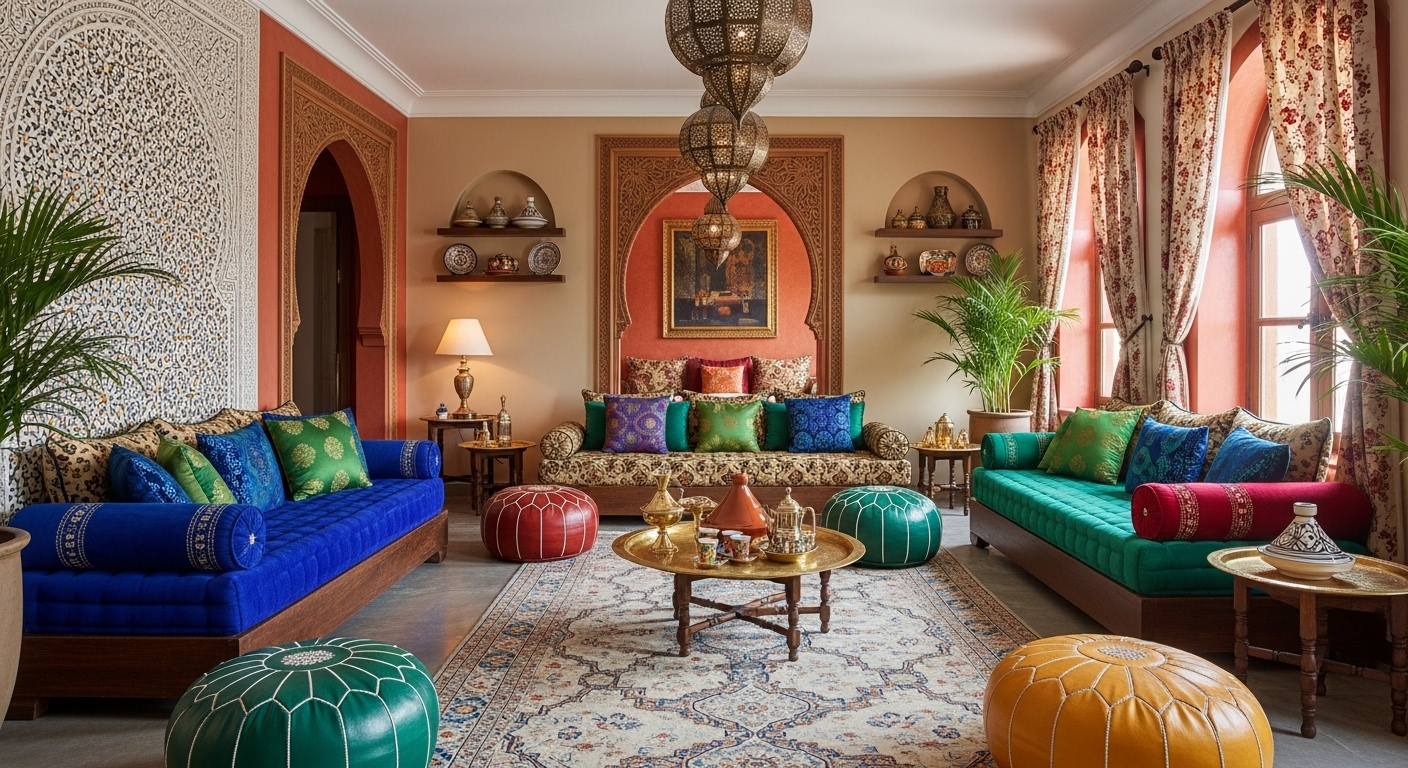
The Moroccan process at Tribuz begins with the concept of Introspective Architecture. Unlike Western styles that look outward, Moroccan design looks inward to the Riad (inner garden). We focus on creating layers of privacy, using horseshoe arches and keyhole doorways to frame views within the home, creating a sense of mystery and depth.
We prioritize Thermal Comfort through Pattern. We map out the placement of Mashrabiya (carved wood latticework) to filter harsh sunlight into soft, geometric shadows while allowing for natural cross-ventilation. The discovery phase is about transforming the home into a sanctuary that feels miles away from the urban noise, centered around the soothing sound of water and the rhythm of repeating forms.
02. The Alchemy of Zellige
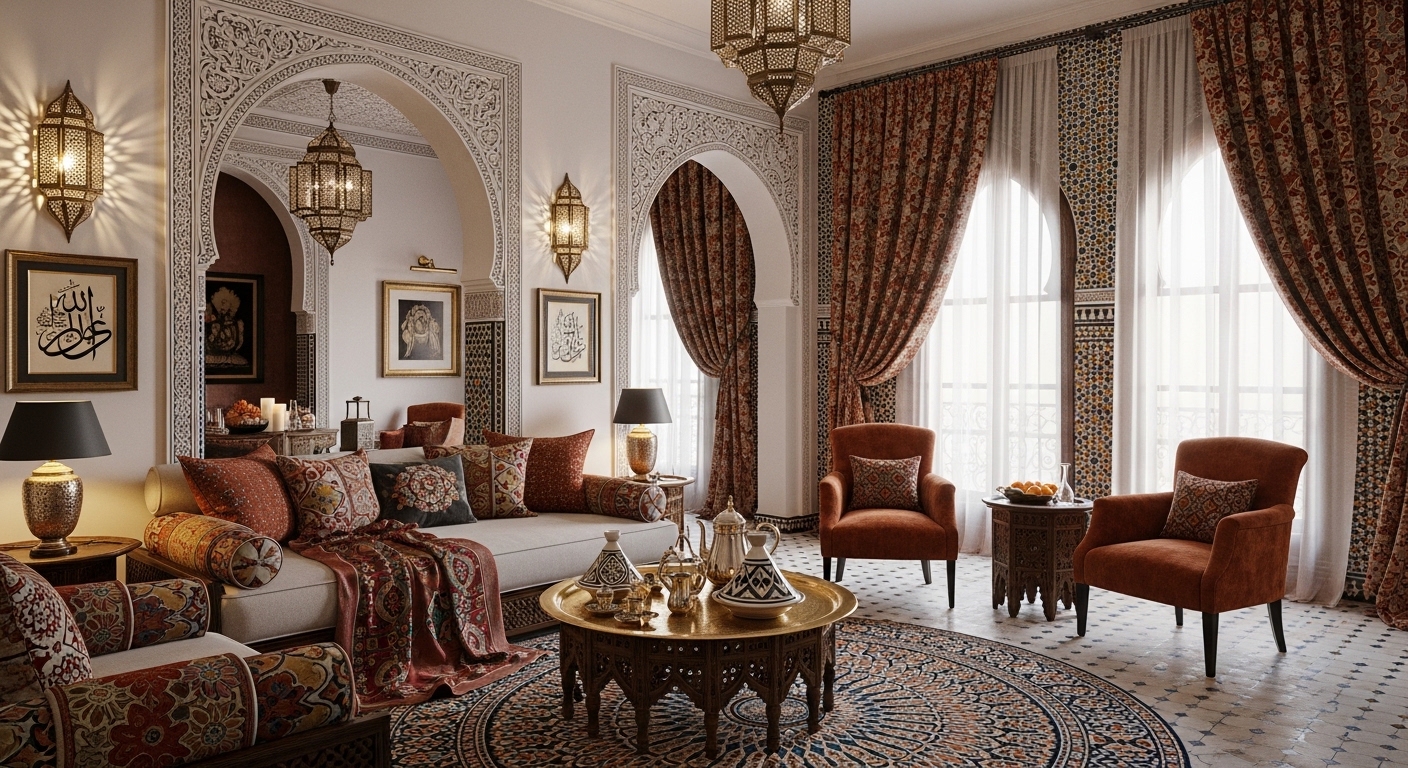
Execution is where we practice the Alchemy of Zellige. We celebrate the vibrant, mathematical beauty of Moroccan tilework—hand-cut terracotta tiles set into intricate geometric mosaics. Our artisans focus on the "Art of the Earth," using a palette of cobalt blue, saffron yellow, and terracotta red, balanced against cool white lime-plaster walls (Tadelakt).
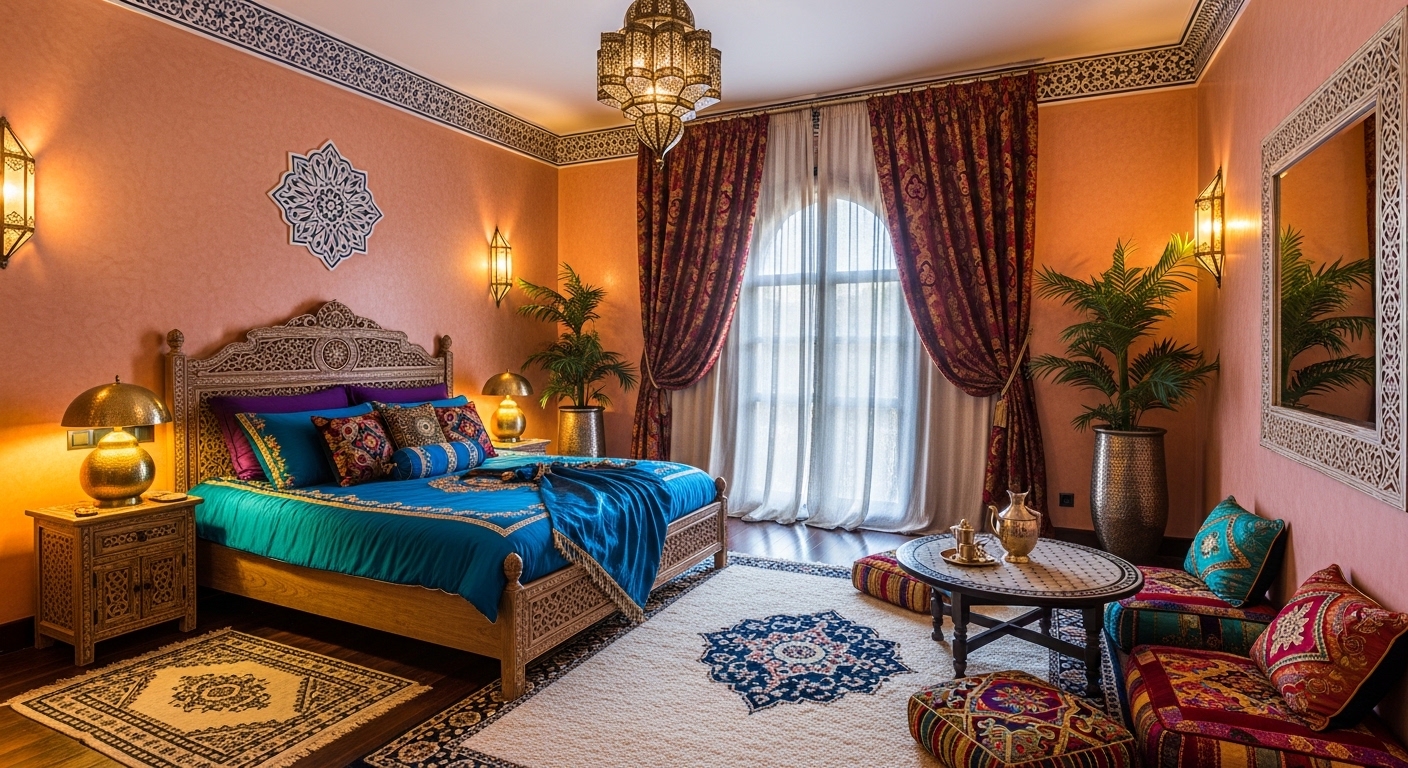
We layer the space with Tactile Maximalism. We pair hammered copper lanterns—which cast "star-map" shadows across the room—with plush, low-seated silk divans and hand-knotted Berber rugs. Every surface is a testament to hand-craft, from the intricate "Muqarnas" (honeycomb vaulting) in the ceiling to the heavy, carved cedar-wood doors. For Tribuz, a Moroccan interior is a celebration of the exotic—a rich, textured narrative that honors the desert’s soul.