01. Aesthetic Erasure
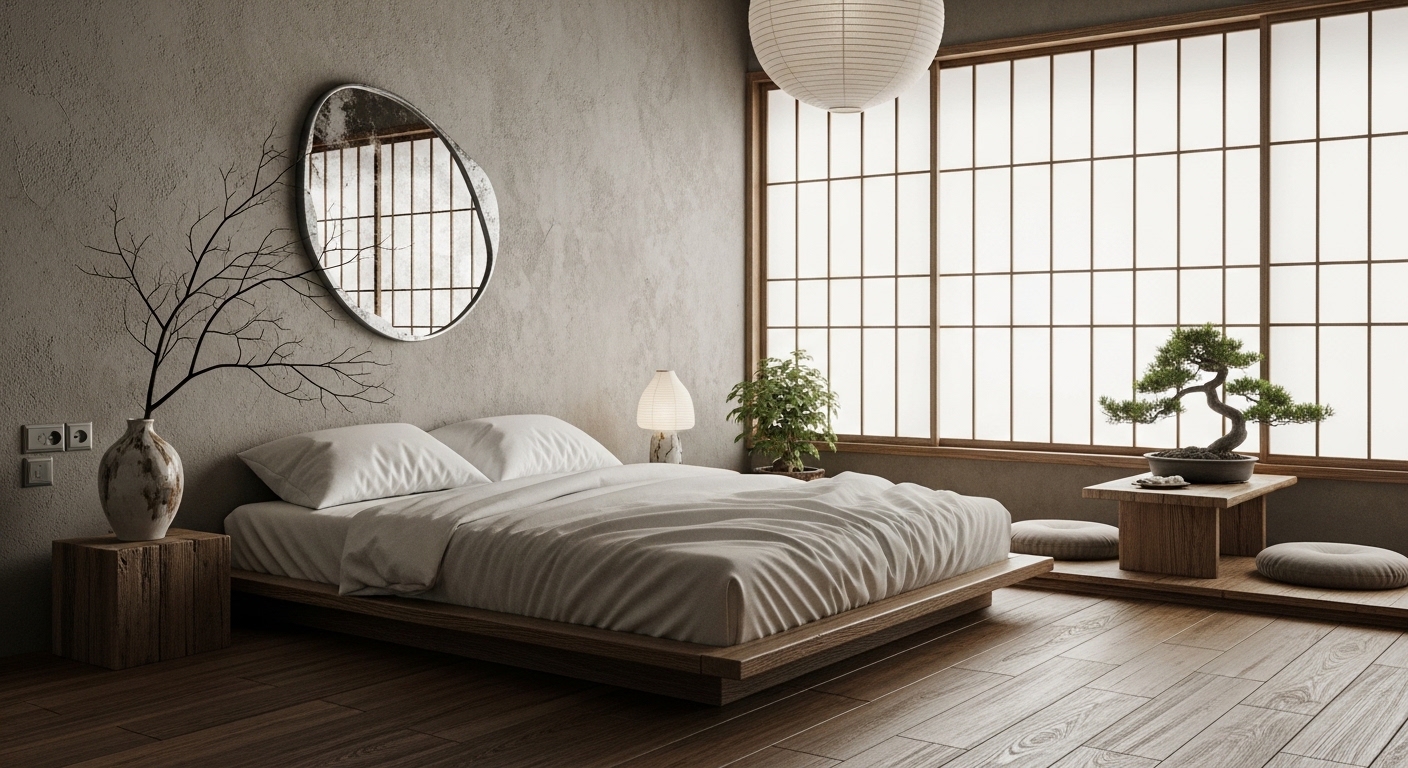
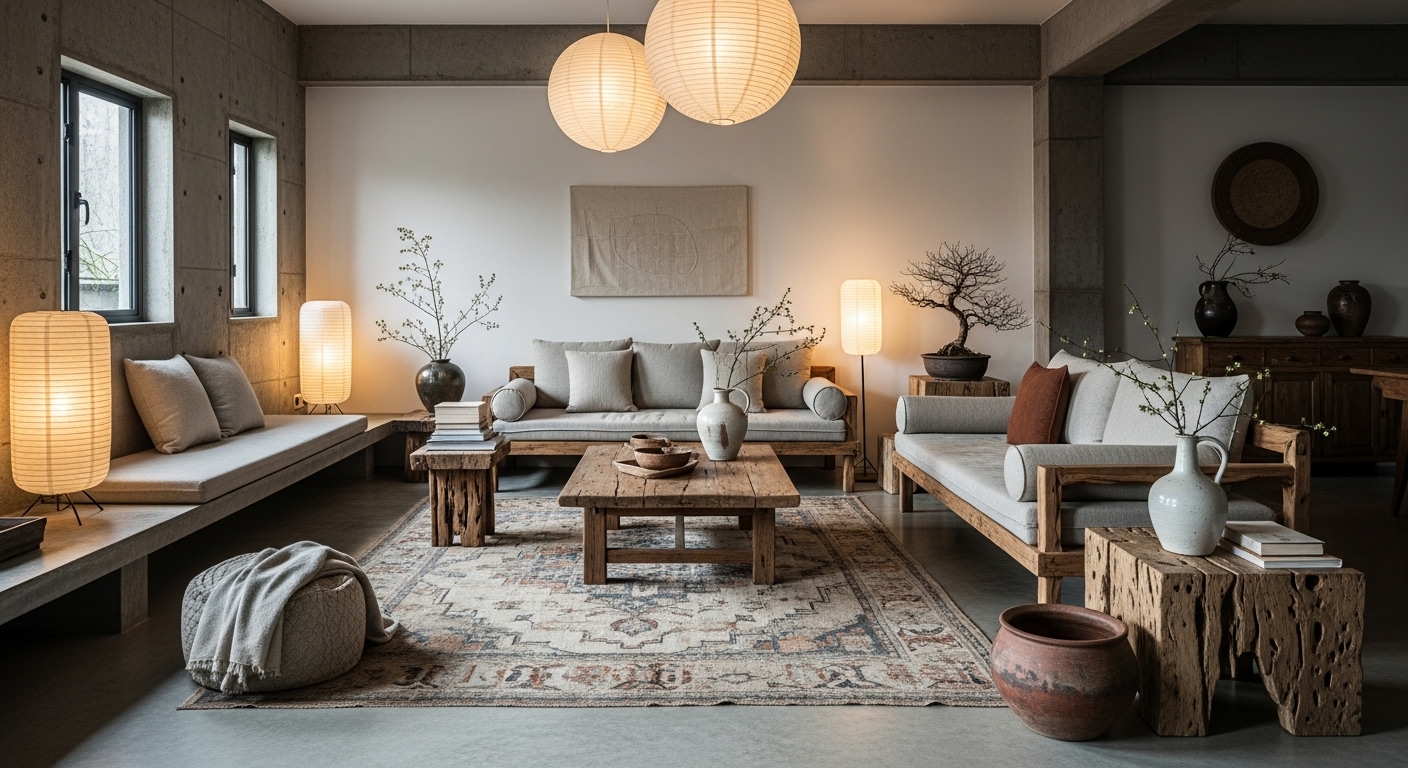
The Wabi-Sabi process at Tribuz begins with Aesthetic Erasure. We move away from "curating" and toward "stripping back." The discovery phase is about finding the Ma (the space between things). We don't fill rooms; we let them breathe. We analyze the site’s natural light to see how it can be used to highlight the raw textures of a wall or the grain of a floor, rather than hiding them under artificial gloss.
We prioritize Asymmetrical Balance. Life isn't perfect, and neither is our design. We reject the rigid symmetry of Western classical styles in favor of a layout that feels accidental and unforced. The goal is to create a home that feels "incomplete" in a way that invites the inhabitant to age alongside the space.
02. The Dignity of Decay
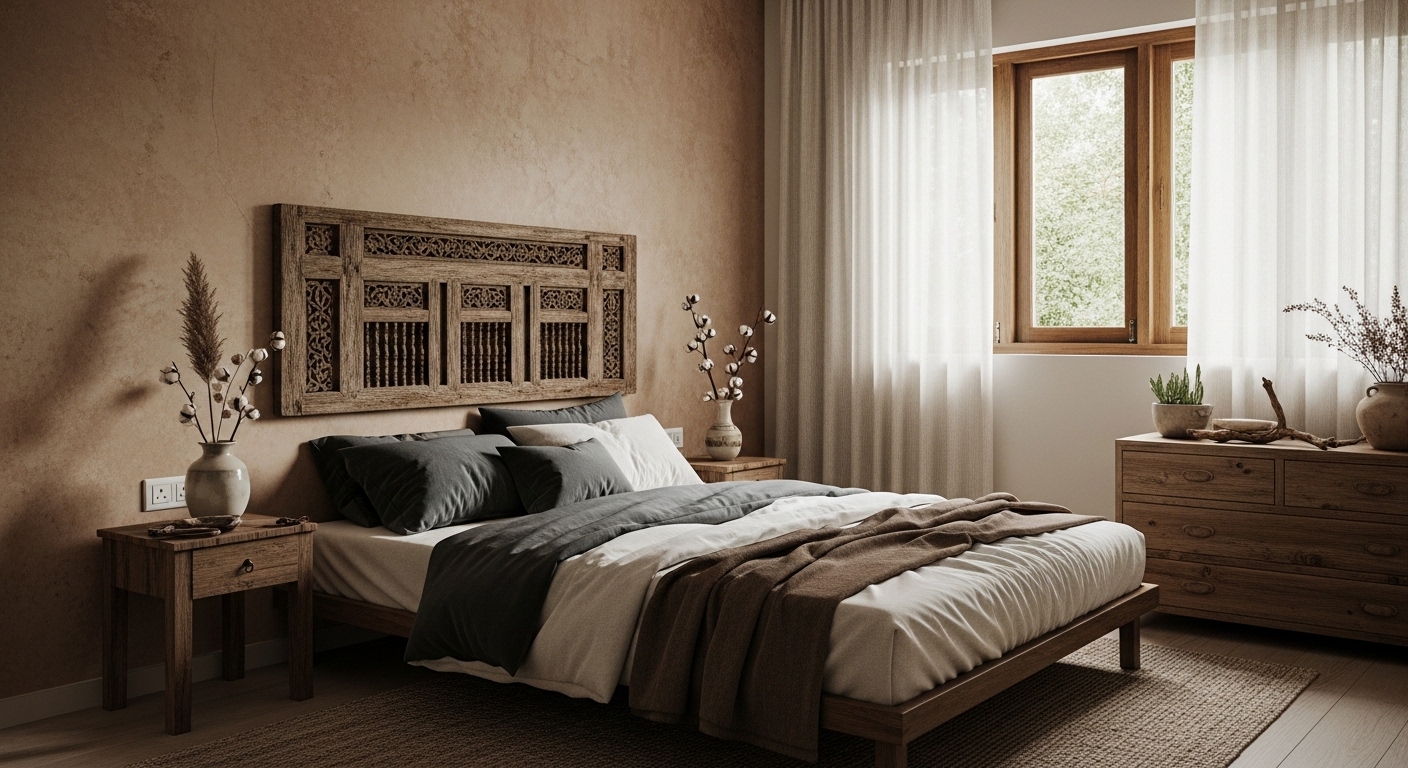
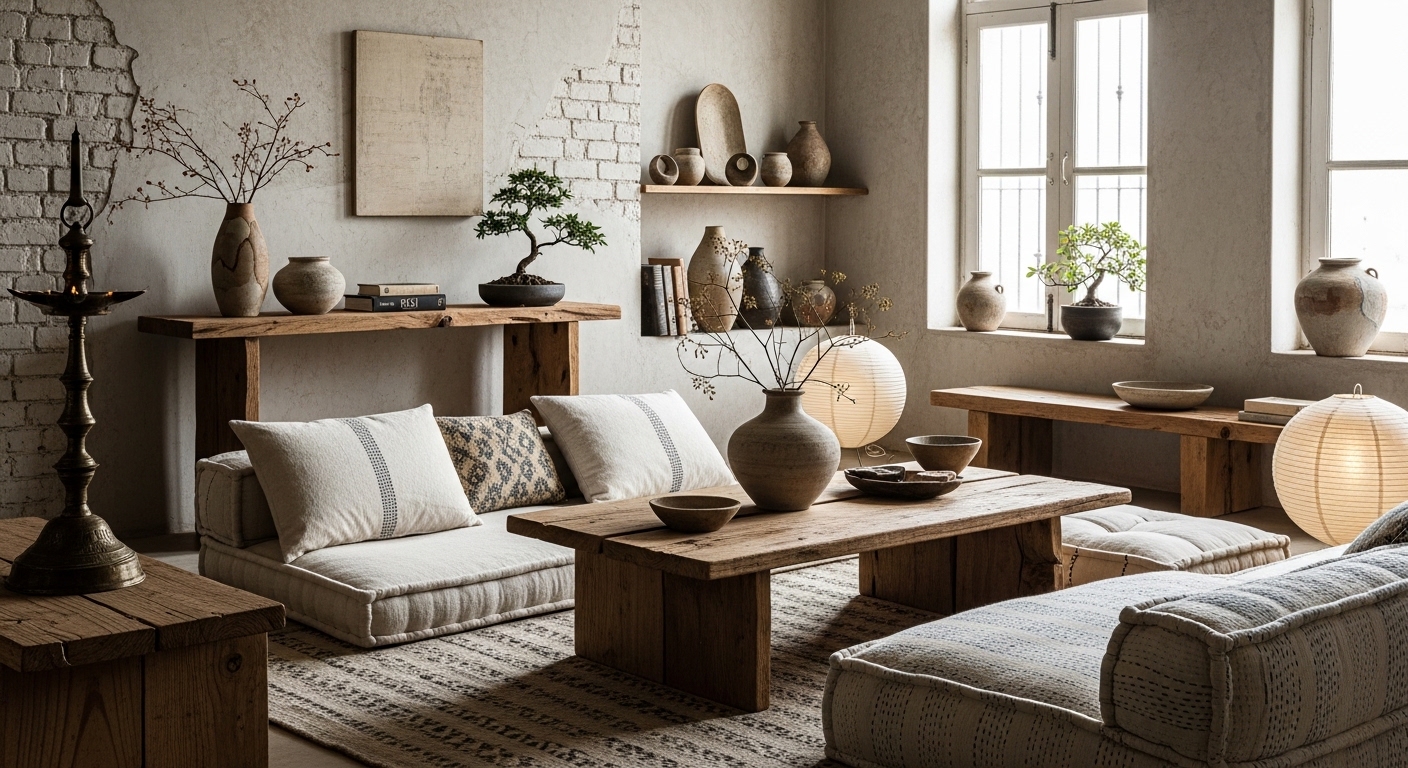
Execution is centered on The Dignity of Decay. We select materials that "weather" beautifully: reclaimed weathered wood, rough-hewn stone, handmade ceramics, and crumpled linens. Our artisans utilize the Kintsugi philosophy—where a crack isn't hidden but highlighted with gold—applying this to architectural elements like floor fissures or wall patinas.
We favor the Tactile & The Tonal. Instead of vibrant colors, we use a palette of "Shadows and Earth"—charred black (Shou Sugi Ban), moss green, and muddy greys. There is no plastic, no high-shine chrome, and no clinical perfection. For Tribuz, a Wabi-Sabi interior is a sanctuary of "low-modesty," where the touch of a hand-plastered wall provides more luxury than any expensive ornament.