Apr 17, 2026
Modern False Ceiling Designs for Indian Homes | Cost & Ideas Guide
False Ceiling Design Ideas India: Modern, Budget & Luxury Options for Every Home
False ceilings have quietly become one of the most impactful elements in modern Indian homes. A decade ago, they were seen as a luxury add-on. Today, they are almost a standard feature in urban apartments and villas. The reason is simple: a well-designed ceiling changes how a room feels without altering its structure.
From hiding wiring and improving lighting to adding depth and character, false ceilings are no longer just decorative. In 2026, Indian homeowners are looking for designs that are practical, energy-efficient, and aligned with modern aesthetics. The good news is that you do not need a massive budget to achieve a premium look.
Why False Ceiling Design Matters in Modern Indian Homes
Most people focus on walls and furniture but ignore the fifth wall the ceiling. That is a missed opportunity. A good false ceiling can define zones in an open layout, improve acoustics, and enhance lighting distribution.
In cities like Gurgaon, Bangalore, and Pune, where apartments are compact, false ceilings help create a sense of structure and design hierarchy. They also allow concealed lighting, which instantly upgrades the look of a room.
Beyond aesthetics, false ceilings help in:
- Hiding electrical wiring and AC ducts
- Reducing heat with proper insulation
- Improving sound absorption
- Enhancing lighting effects
Planning Your False Ceiling Design
Setting a Realistic Budget
Before choosing designs, decide how much you want to spend. False ceiling costs in India usually range from ₹80 to ₹250 per sq. ft. depending on material and design complexity.
A simple gypsum ceiling for a 150 sq. ft. living room may cost around ₹15,000–₹25,000, while a designer ceiling with lighting can go up to ₹50,000 or more.
Break your budget into:
- Material cost
- Lighting fixtures
- Labor charges
- Extra buffer (10–15%)
Avoid over-designing every room. Focus on key areas like the living room and master bedroom.
Choosing the Right Material
Material selection directly impacts durability and cost.
Common Options:
- Gypsum: Most popular, smooth finish, budget-friendly
- POP (Plaster of Paris): Custom designs, slightly higher maintenance
- PVC: Waterproof, ideal for kitchens and bathrooms
- Wood: Premium look but higher cost
Gypsum is usually the best balance between cost and finish for most homes.
Popular False Ceiling Design Ideas in India (2026)
False ceiling trends in India are shifting towards minimal, clean, and functional designs.
Minimalist Layered Ceiling
This design uses simple layers with clean lines instead of heavy patterns. It works well in modern homes where less is more.
Key benefits:
- Clean and elegant look
- Cost-effective
- Works with all lighting styles
Cove Lighting Ceiling
Cove lighting is one of the most popular choices in Indian homes. LED strips are hidden inside ceiling grooves, creating soft indirect lighting.
Why it works:
- Creates a warm ambiance
- Energy efficient
- Ideal for living rooms and bedrooms
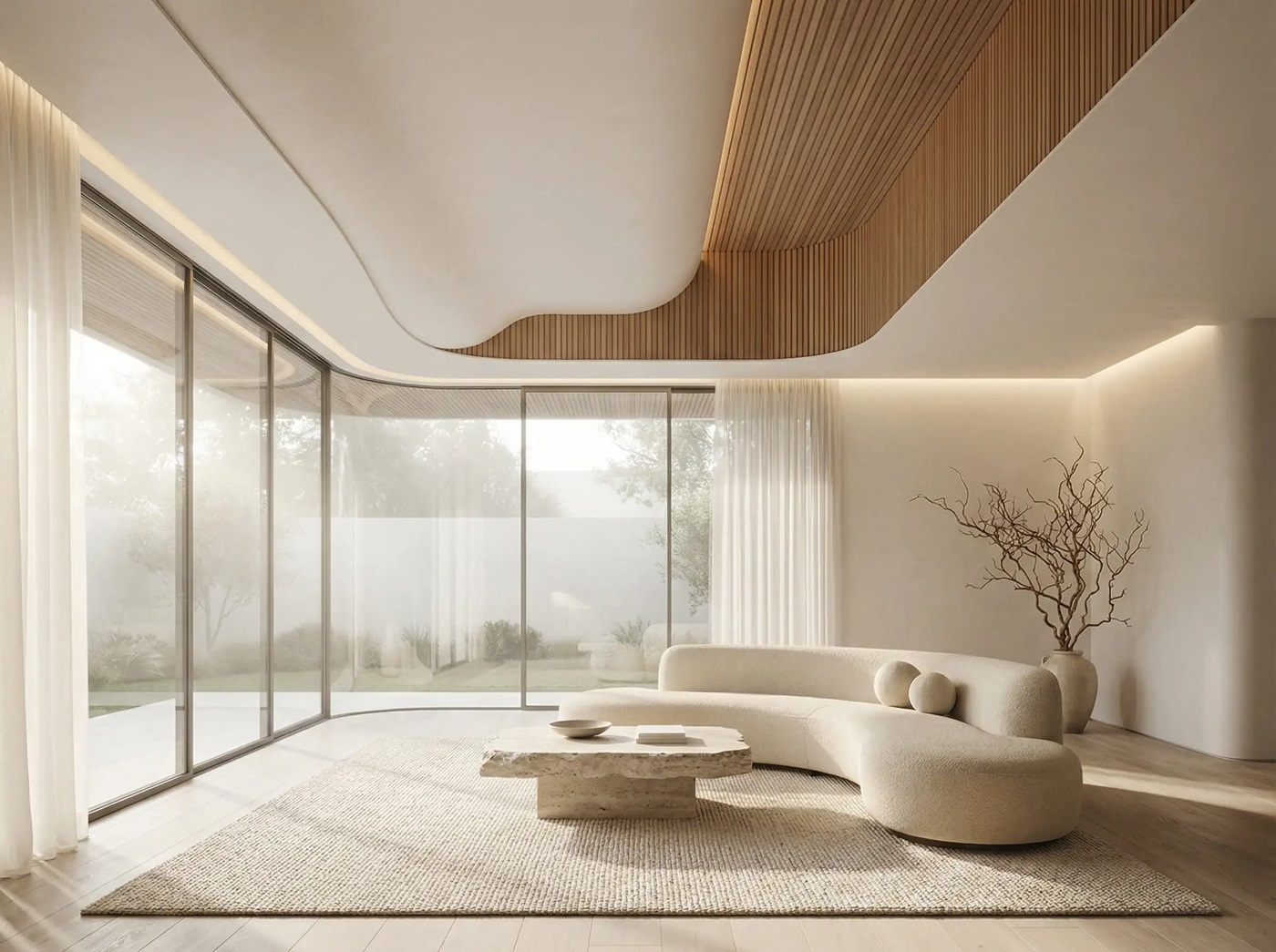
Wooden False Ceiling
Wooden panels add warmth and richness to interiors. Even a small wooden section can create a luxury feel.
Best for:
- Living rooms
- Dining areas
- Accent ceiling zones
Geometric Ceiling Designs
Geometric patterns are trending in 2026. These designs use shapes like rectangles or hexagons to create visual interest.
Important note:
Keep patterns subtle. Over-designing can make the ceiling look cluttered.
Floating Ceiling Design
Floating ceilings give the illusion that the ceiling is suspended. This is achieved using hidden supports and LED lighting.
Benefits:
- Modern and premium look
- Adds depth to the room
- Works well in luxury homes
Simple POP Designs
POP allows for curved and customized shapes. It is ideal if you want a unique design but at a slightly higher cost than gypsum.
Room-wise False Ceiling Ideas
Living Room Ceiling
The living room is where you can experiment the most. A layered ceiling with cove lighting and a central panel works well.
Focus on:
- Balanced lighting
- Clean design
- Highlighting seating area
Bedroom Ceiling
Bedrooms should have calming designs. Avoid heavy patterns.
Best options:
- Soft cove lighting
- Minimal layers
- Warm light tones
Kitchen Ceiling
Kitchens require practical solutions.
Use:
- PVC ceiling (moisture resistant)
- Simple designs
- Bright lighting
Bedroom Ceiling
Bedrooms should have calming designs. Avoid heavy patterns.
Best options:
- Soft cove lighting
- Minimal layers
- Warm light tones
Bathroom Ceiling
Bathrooms need waterproof materials.
Best choice:
- PVC panels
- Simple flat ceiling
- Proper ventilation
Lighting Ideas for False Ceilings
Lighting is what makes or breaks a false ceiling design.
Recommended options:
- LED strip lights for indirect lighting
- Spotlights for focus areas
- Pendant lights for decorative touch
- Warm white lighting (2700K–3000K)
Avoid mixing too many lighting styles in one room.
Common False Ceiling Mistakes to Avoid
Many homeowners overspend or over-design their ceilings.
Avoid these mistakes:
- Making ceiling too low
- Using too many design elements
- Poor lighting placement
- Ignoring maintenance needs
- Not planning electrical points in advance
A simple, well-executed design always looks better than a complex one done poorly.
Cost Breakdown for False Ceiling in India
Here is a rough estimate for a 2BHK home:
- Living room ceiling: ₹20,000–₹50,000
- Bedroom ceilings: ₹15,000–₹30,000 each
- Kitchen & bathroom: ₹8,000–₹15,000
Total estimated cost: ₹80,000–₹1,50,000 depending on design and materials.
Why Choose Tribuz Interiors
Tribuz Interiors specializes in modern, functional, and budget-friendly false ceiling designs. Their approach focuses on balancing design with practicality.
They offer:
- Customized ceiling designs
- Material selection guidance
- Lighting planning
- End-to-end execution
Their designs are tailored to Indian homes and lifestyles, ensuring long-term usability.
Tips to Save Money on False Ceiling
You do not need to overspend to get a good design.
Smart tips:
- Use simple gypsum designs
- Limit designer ceilings to key rooms
- Choose LED lighting (low electricity cost)
- Avoid unnecessary layers
- Work with experienced professionals
Conclusion
False ceilings are one of the most effective ways to upgrade your home without major structural changes. The key is to keep the design simple, functional, and aligned with your overall interiors.
In 2026, the focus is shifting towards minimalism, smart lighting, and practical designs. With proper planning, even a modest budget can deliver a premium look.
Start with one room, get the design right, and expand gradually. That approach works better than trying to do everything at once.
FAQs
What is the cost of false ceiling in India?
It usually ranges from ₹80 to ₹250 per sq. ft. depending on material and design.
Which material is best for false ceiling?
Gypsum is the most commonly used material due to its smooth finish and affordability.
Is false ceiling suitable for small rooms?
Yes, but keep the design simple to avoid making the room feel smaller.
How long does a false ceiling last?
A well-maintained gypsum ceiling can last 10–15 years.
Can false ceiling reduce heat?
Yes, it provides insulation and helps in reducing room temperature.